
Introductory Summary
Unlocking New Capabilities with Traction-Supplied Auxiliary Power for HVAC, Onboard Control Electronics, and Wayside Rail Infrastructure
Across modern rail networks, the demand for compact, efficient and standards-aligned auxiliary power is increasing rapidly. Rolling stock HVAC systems, onboard compressors, communication equipment, sensors and low voltage control electronics all require clean and reliable power. Traditionally these loads were supplied through transformer arrangements or by tapping auxiliary circuits within the traction chain.
Today, with higher efficiency requirements, strict spatial constraints and more complex onboard electronic systems, the industry is shifting toward dedicated catenary-fed conversion platforms. These include both DC/AC inverters for three phase loads and DC/DC converters for control and auxiliary electronics.
Premium PSU, supported locally by Powerbox Australia, has emerged as a leader in this field. Their OVX-6400 three phase catenary-fed inverter and CVS-280 high voltage DC/DC converters provide isolated, rail-compliant solutions that take power directly from the overhead line. Both technologies leverage Premium’s research into wide-bandgap semiconductors, which has delivered measurable gains in efficiency, thermal performance and power density.
These topics were recently explored in detail during Premium PSU’s technical session at Powerbox Australia’s Powering Evolution in Rail Event . This article builds on that presentation and provides a practical engineering overview of the latest developments in catenary power conversion, covering both AC and DC architectures. It also highlights emerging opportunities to use traction supply to support wayside systems where extending a conventional mains service would be impractical or cost-prohibitive.
Why Catenary Power Conversion is Becoming Essential
Auxiliary systems on rolling stock continue to expand in scope and electrical demand. HVAC compressors, fans, pumps, braking modules, battery chargers, communication equipment and monitoring systems all place increasing load on the onboard power architecture.
These requirements were discussed extensively during Premium PSU’s session at Powering Evolution in Rail event, where a clear shift toward decentralised, traction-fed auxiliary power was highlighted. Engineers across both rolling stock and infrastructure projects see this as a way to reduce dependence on the traction auxiliary inverter, increase system flexibility and simplify power delivery to remote assets.
Key drivers include:
- A desire for higher efficiency
- Tighter mechanical envelopes for rooftop and underfloor installations
- More stringent EMC compliance
- Growth in distributed low-voltage electronics
- Long lifecycle expectations
- Improved isolation and safety
- Opportunities to avoid expensive mains extensions for trackside equipment
These factors are influencing the adoption of catenary-fed auxiliary converters such as the OVX-6400 and CVS-280.
GaN and SiC Research: Foundation for Modern High Voltage Rail Converters

The Engineers at Premium PSU have invested heavily in the practical application of wide-bandgap semiconductors for high-voltage traction environments, focusing on how GaN and SiC devices can improve switching performance, thermal behaviour and power density in railway power converters. Their on-going research program includes the development and testing of multiple high-efficiency demonstrators across PFC, resonant and buck topologies, providing real-world insight into how these devices respond to the voltage fluctuations, transients and EMC conditions typical of EN50163 overhead line systems. This work directly informs the switching strategies, magnetics design and control architectures used in current-generation catenary-fed AC and DC conversion platforms.
This research has contributed directly to improvements across several areas of Premium’s rail product development, including:
- Higher switching frequencies, enabling smaller inductive components and reduced converter footprint.
- Lower conduction and switching losses, improving overall conversion efficiency and reducing thermal stress on semiconductors and magnetics.
- Refined magnetics design, based on detailed characterisation of high-frequency behaviour under traction supply conditions.
- Improved transient response, supporting stable operation during regenerative braking events, voltage dips and pantograph disturbances.
- Better utilisation of PCB copper and thermal paths, achieved through optimisation informed by wide-bandgap switching behaviour.
- More compact isolated stages, particularly important for platforms such as the OVX-6400 where mechanical envelopes are tightly constrained.
- Higher power density at elevated input voltages, supporting future converter platforms with increased output capability or reduced physical size.
-
Control-loop and gate-drive refinement, improving dynamic stability and reducing electromagnetic interference in high-noise traction environments.

Catenary-Fed AC Conversion for Rolling Stock: OVX-6400-7701
The OVX-6400-7701 is a 6.4 kVA three phase DC/AC inverter designed for direct connection to the 600 to 750 Vdc traction supply under EN50163. The technology behind the OVX-6400-7701 originated as a custom design for a global HVAC manufacturer and has since matured into a production-ready platform suitable for rolling stock and selected trackside applications.
Key Capabilities
- Three phase AC output with configurable voltage and frequency
- Input compliant with EN50163 and EN50124-2
- Reinforced galvanic isolation (5400 Vrms)
- Integrated EMC filtering in accordance with EN50121-3-2
- Supports parallel operation for higher output and or redundancy.
- CAN bus and RS-232 communication
- Reverse-power or mid-power input configuration
- Isolated alarm outputs
- Suitable for rooftop, underfloor or equipment-room environments
Internal Architecture
The OVX-6400 uses a structured multi-stage conversion approach:
-
High-voltage DC/DC front end
Accepts the full traction voltage range, provides galvanic isolation and stabilises the DC link. This stage protects against dips, surges and regenerative voltage rises.
-
Traction-grade EMC filtering
Suppresses ripple, conducted noise and high-frequency interference present on overhead line systems.
-
Three phase inverter stage
Generates a clean, low-distortion three phase output optimised for HVAC motors and other inductive loads, providing smooth startup and stable running characteristics.
Together, these stages ensure reliable operation even during voltage fluctuations, harmonics or transient events on the overhead network.
Mechanical and Installation Considerations
The OVX-6400 is engineered for the mechanical and environmental conditions typical of modern rolling stock. The design incorporates high-reliability cooling fans to maintain stable thermal performance in enclosed mounting locations such as HVAC housings or underfloor equipment bays. The unit meets EN61373 vibration requirements and is suitable for installation in rooftop, underfloor or equipment-room environments.
Extended Use Case: Catenary-Fed Power for Trackside Assets
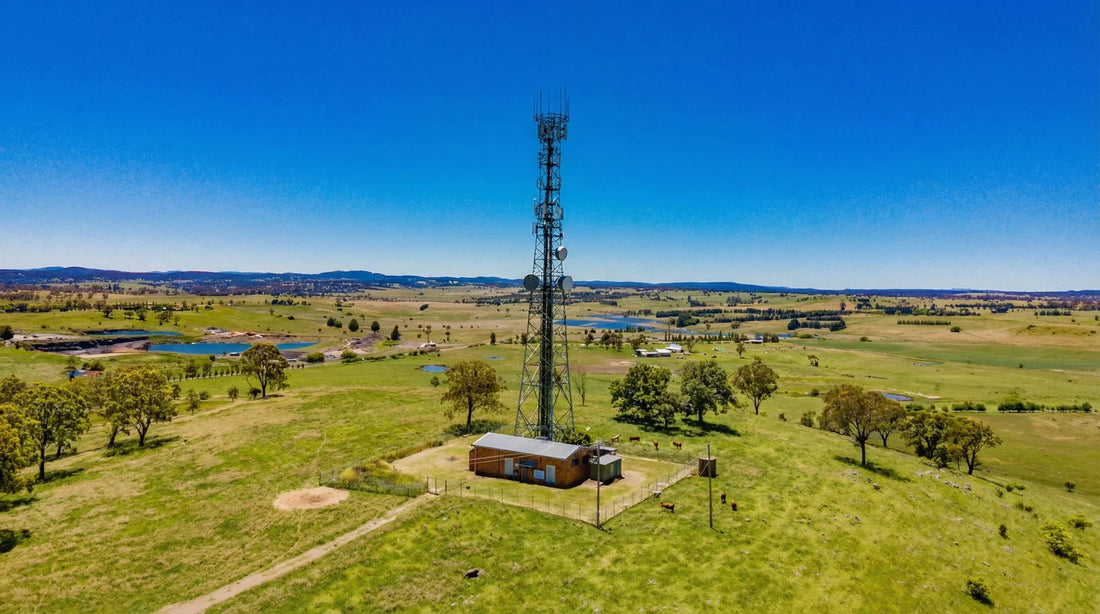
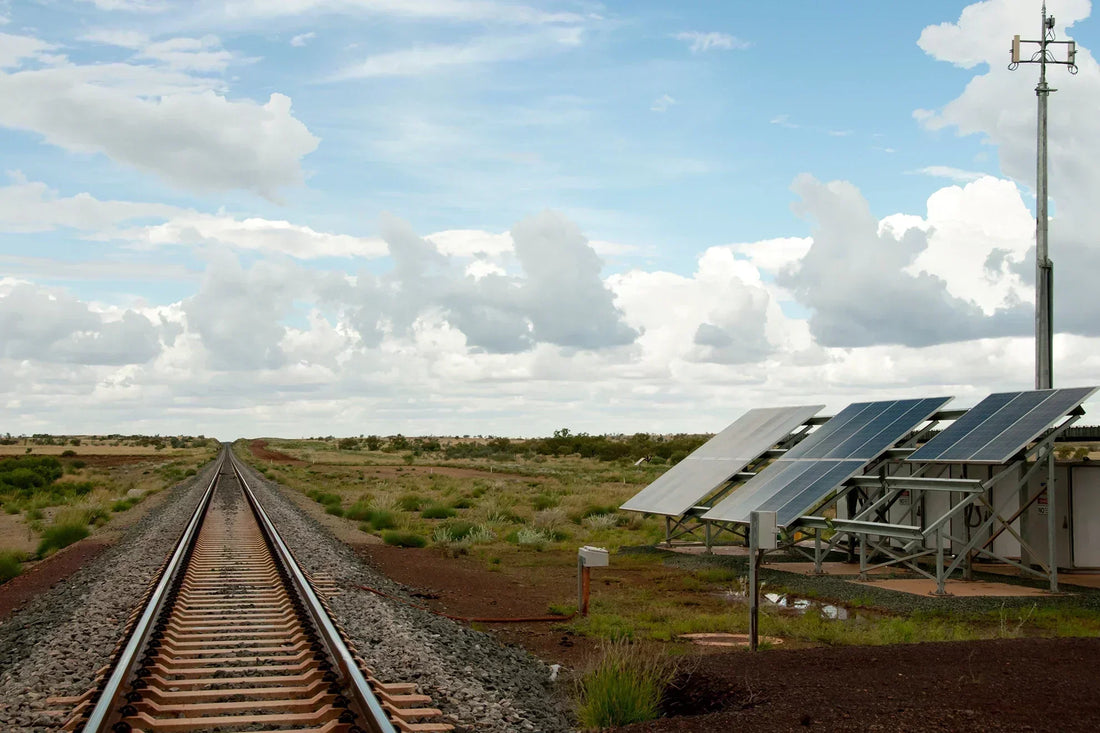
The OVX-6400 is increasingly being evaluated for small wayside installations where a dedicated mains supply is unavailable or cost-prohibitive to install. This challenge is particularly relevant across urban tram and light rail networks, where infrastructure typically runs through constrained streetscapes with limited room for new power pillars, distribution boards or underground conduits. In these corridors, even modest electrical loads can trigger significant civil works, utility approvals and traffic management, making a conventional mains extension impractical for smaller operational systems.
Typical applications include:
- Condition monitoring sensors
- Points monitoring and diagnostics modules
- Remote lighting circuits for safety and maintenance access
- Small communication or telemetry devices
- Localised instrumentation or environmental sensors
- Low-power control equipment positioned along stops or corridor interfaces
Although the OVX-6400 is a three phase inverter, it can also supply small single phase loads from one of its phases, provided the per-phase rating is not exceeded. As a guide, the platform can support approximately 2 kVA per phase, making it suitable for many small, distributed loads commonly found along tram and light rail alignments.
In these scenarios, drawing energy directly from the traction supply and converting it through a compact, isolated inverter such as the OVX-6400 provides a practical and technically robust alternative. It delivers a stable AC output suitable for equipment cabinets or small load centres without requiring new utility connections or additional distribution infrastructure.
For dense urban tram or light rail environments, this approach can:
- Avoid trenching, conduit installation and roadway reinstatement
- Remove the need for new metered supply pillars or distribution boards
- Reduce approval complexity with electrical utilities and local authorities
- Enable faster deployment of monitoring and operational systems
- Provide full electrical isolation from the traction network in accordance with EN50124-1
As modern tram and light rail networks expand their use of condition-based maintenance, remote diagnostics and distributed wayside systems, catenary-fed auxiliary inverters offer a practical and efficient method of powering these assets without substantial civil or electrical upgrades.
Catenary-Fed DC Conversion for Control and Auxiliary Systems: The CVS-280

Where low voltage DC power is required, Premium’s CVS-280 series provides a compact, isolated DC/DC converter capable of operating directly from the same 600 to 750 Vdc traction supply.
The CVS-280 is suited to powering control electronics, communication equipment, sensors, PLCs and low-voltage auxiliary loads across both rolling stock and wayside applications.
Key Capabilities
- Input range: 400 to 1100 Vdc compliant with EN50163 and EN50124-2
- Output options: 24 V, 48 V, 72 V or 110 V models
- 280 W continuous output power with 400 W peak capability
- 7000 Vrms galvanic isolation
- Low output voltage alarm
- Remote inhibit capability
- ORing diode for redundancy or parallel battery operation
- Natural convection cooling
- Conformal coated PCBs for harsh environments
- Vibration compliant to EN61373 Category 1 Class B
Internal Architecture
The CVS-280 uses a fixed-frequency isolated DC/DC topology designed to provide stable low voltage output even under challenging traction supply conditions.
-
High voltage input stage
Accepts the full EN50163 voltage envelope, including temporary dips and surges. Reverse polarity protection and input fusing ensure safe behaviour in fault conditions. -
Galvanic isolation and conversion stage
A reinforced insulation transformer provides 7 kVrms isolation. This prevents high-energy transients on the catenary from propagating into low voltage control circuits. -
Output regulation and protection
The regulated low voltage output includes an ORing diode for redundancy or battery paralleling, current limiting for overload protection and a solid-state low voltage alarm for supervisory systems.
Applications in Rolling Stock and Trackside Infrastructure
The CVS-280 is well suited to powering:
- Control electronics in HVAC, braking or communication systems
- PLCs, relays and embedded controllers
- Low voltage power in pantograph or converter monitoring circuits
- Wayside monitoring systems requiring isolated 24 or 48 Vdc
- Remote trackside sensor nodes where extending mains is impractical
Its compact size and low thermal footprint allow installation inside crowded equipment cabinets or distributed control boxes.
Engineering Considerations for Deploying Catenary-Fed AC and DC Auxiliary Systems
Designing auxiliary systems that operate directly from the traction supply requires careful attention to electrical, mechanical and environmental constraints. Both the OVX-6400 and CVS-280 platforms simplify many of these risks through their internal architecture and standards compliance, but successful deployment still depends on broader system-level engineering decisions.
Key considerations include:
Electrical Integration
- Compliance with traction voltage behaviour: EN50163 defines temporary dips, surges, regenerative events and voltage ripple. Auxiliary converters must maintain stable operation across these conditions without passing disturbances into low-voltage equipment.
- Isolation and safety coordination: EN50124-1 sets insulation requirements for equipment connected to the traction supply. The galvanic isolation provided by both conversion platforms supports electrical separation between the traction network and control systems.
- Conducted and radiated EMC performance: EN50121-3-2 imposes strict limits on emissions and immunity. Proper filtering, bonding and grounding practice is essential to ensure stable operation of nearby signalling, communication and control circuits.
- Load diversity and redundancy: For AC auxiliary loads, engineers must account for inrush behaviour, motor startup profiles and the per-phase power budget. For DC systems, redundancy via ORing diodes or parallel converters may be required for critical loads.
Mechanical and Installation Considerations
- Vibration and shock exposure: Rolling stock environments can be demanding, particularly for underfloor or rooftop equipment. Both the OVX-6400 and CVS-280 meet EN61373, but mounting surfaces and fasteners must also be selected accordingly.
- Thermal management and airflow: Although both products support a wide operating temperature range, installation locations with restricted airflow require attention to clearance, ventilation and heat dissipation.
- Envelope constraints: Rooftop HVAC housings, underfloor compartments and compact wayside cabinets often leave little room for power conversion hardware. Compact, high-power-density platforms reduce integration effort.
Operational and Maintenance Aspects
Remote monitoring and diagnostics: CAN bus and RS-232 interfaces on the OVX-6400, as well as alarm signalling on both platforms, provide opportunities for integrating converters into wider asset monitoring frameworks.
Lifecycle and long-term serviceability: Consideration should be given to access for replacement, connector standardisation, spare-part availability and alignment with fleet-wide maintenance practices.
Standards alignment across fleet modifications: Mixed-fleet environments, such as urban tram or light rail operations, may require harmonised approaches to distribution, isolation and protective device coordination.
When these factors are addressed as part of a complete system design, catenary-fed AC and DC converters provide a technically robust method of powering modern rolling stock subsystems and distributed wayside assets.
Final Thoughts

Catenary-fed auxiliary power systems are becoming increasingly relevant as rail networks transition toward more distributed electronics, higher-efficiency HVAC platforms and expanded wayside monitoring capability. Platforms such as Premium PSU’s OVX-6400 three phase inverter and CVS-280 high-voltage DC/DC converter allow engineers to draw power directly from the traction supply while maintaining galvanic isolation, EMC compliance and predictable electrical behaviour.
For rolling stock manufacturers, these technologies reduce dependence on traction auxiliary inverters and simplify integration of HVAC, control electronics and small AC loads. For tram and light rail networks, they provide a practical pathway for powering low-voltage and small AC wayside systems without requiring new mains connections or civil works.
Combined with Premium’s ongoing GaN and SiC research program, these products represent a significant advancement in high-voltage auxiliary power conversion, offering improved efficiency, better thermal performance and greater power density within the mechanical constraints of modern rail vehicles.
Powerbox Australia supports the deployment of these systems across both Australian and New Zealand networks, providing engineering assistance, integration support and product knowledge to assist operators and OEMs in real-world applications.

Frequently Asked Questions: AC and DC Catenary-Fed Auxiliary Power
What is a catenary-fed auxiliary converter?
A catenary-fed converter draws power directly from the overhead traction supply and delivers either AC or DC output for auxiliary loads such as HVAC systems, control electronics or wayside equipment.
Why use traction supply rather than a conventional auxiliary inverter?
Using the traction supply can reduce reliance on the main auxiliary inverter, simplify cabling, enable decentralised power architectures and provide access to power along the corridor in locations where mains supply is difficult to install.
What types of loads are suitable for the OVX-6400?
The OVX-6400 can supply three phase HVAC compressors, fans, pumps and other inductive loads. It can also support small single phase loads (up to approximately 2 kVA per phase) for onboard or distributed wayside systems.
When is the CVS-280 the better choice?
The CVS-280 is ideal for low-voltage control equipment, PLCs, relays, sensors and communication systems that require isolated 24, 48, 72 or 110 Vdc power derived directly from the traction supply.
Do these converters comply with railway standards?
Yes. Both platforms are designed for compliance with EN50163, EN50155, EN50124-1/2, EN61373, EN45545-2 and EN50121-3-2, depending on installation and configuration.
Can these systems be used outside rolling stock?
Yes. Both AC and DC converters can be used to power small wayside installations where mains access is limited or costly, particularly in tram and light rail networks with constrained urban streetscapes.
Is galvanic isolation important?
Yes. Isolation prevents high-energy disturbances on the traction supply from propagating into low-voltage control circuits, improving safety and equipment longevity.
Where can these products be sourced in Australia and New Zealand?
Powerbox Australia supplies and supports Premium PSU’s catenary-fed AC and DC converter platforms, offering local engineering assistance for specification, design and integration.
About Premium PSU
Premium PSU is a Barcelona-based manufacturer of high-reliability power conversion equipment for rail, industrial and defence applications. Founded in 1981, the company designs and produces AC/DC, DC/DC and DC/AC converters with full in-house capability across electrical, mechanical, thermal and EMC engineering.
Premium’s railway portfolio includes catenary-fed inverters, high-voltage DC/DC converters and custom power modules compliant with EN50155, EN50163, EN50121-3-2, EN61373 and EN45545-2.
Powerbox Australia supports the integration and deployment of Premium PSU technologies across Australian and New Zealand rolling stock and rail infrastructure projects. Find out more here.