System-Level Safety and Compliance - Part 5 of Polarium's Five Layers of Safety
News > System-level safety and compliance - part 5 of polarium's five layers of safety
BLOGS

System-Level Safety and Compliance - Part 5 of Polarium's Five Layers of Safety

19/02/26 James Rutty

Polarium’s approach to system-level safety extends beyond the design of the battery itself. It encompasses how batteries are integrated, installed, and operated as part of larger power systems in telecommunications and industrial environments. The company’s compliance framework is built around internationally recognised safety standards, regional installation guidelines, and rigorous internal processes to ensure every deployed system operates safely throughout its life cycle.

Certification and Standards Compliance

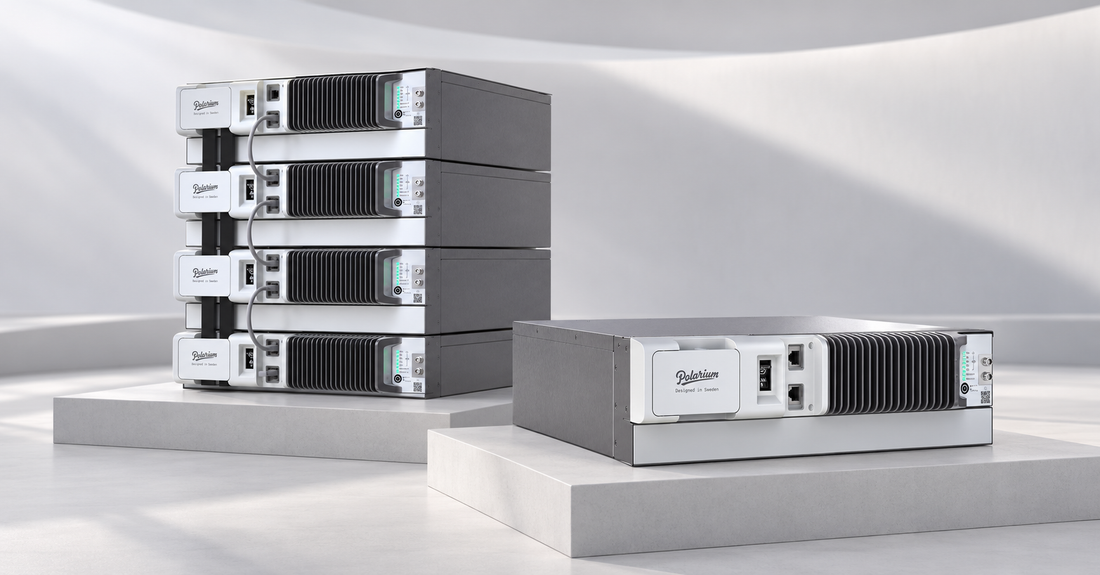
Polarium batteries, supplied by Powerbox, are designed and certified to comply with leading global safety standards for lithium-ion energy storage:

  • IEC 62619 – Safety requirements for secondary lithium cells and batteries for use in industrial applications.
  • UN 38.3 – Transportation safety standard ensuring safe handling and shipment of lithium-ion batteries.
  • CE Marking – Conformance with European Union safety, health, and environmental protection standards.
  • UL 1973 – Safety standard for stationary and motive auxiliary power applications (UL-certified models available on request).
  • RCM (Regulatory Compliance Mark) – Demonstrates compliance with relevant Australian electrical safety and electromagnetic compatibility requirements.


For the Australian market, Polarium products are typically certified to IEC 62619 and related IEC standards, which are widely accepted for telecommunications and industrial installations. UL-certified models can be supplied where projects require North American certification or specific UL listing.

Installation and Local Compliance Considerations

While Australian Standard AS/NZS 5139 Electrical Installations – Safety of battery systems for use with power conversion equipment is primarily written for residential applications, it is sometimes referenced in telecommunications and industrial projects as a guideline for best practice. For mission-critical sites, compliance often extends to:

  • Electrical protection devices meeting IEC 60947 or equivalent standards.
  • Cabling and terminations that meet AS/NZS 3000 (Wiring Rules).
  • Battery enclosures with appropriate ingress protection (IP) ratings.
  • Separation of battery banks in mixed-chemistry configurations.

By working with integrators and end-users, Polarium ensures that installation practices maintain compliance while supporting system reliability and ease of maintenance.

Integration with Electrical Protection Devices

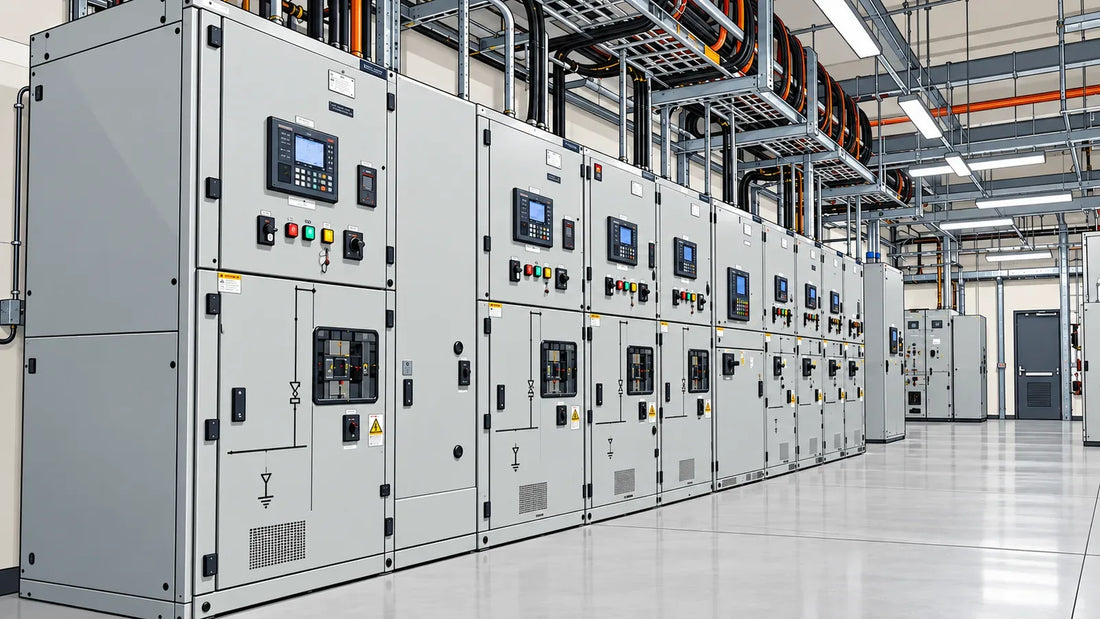
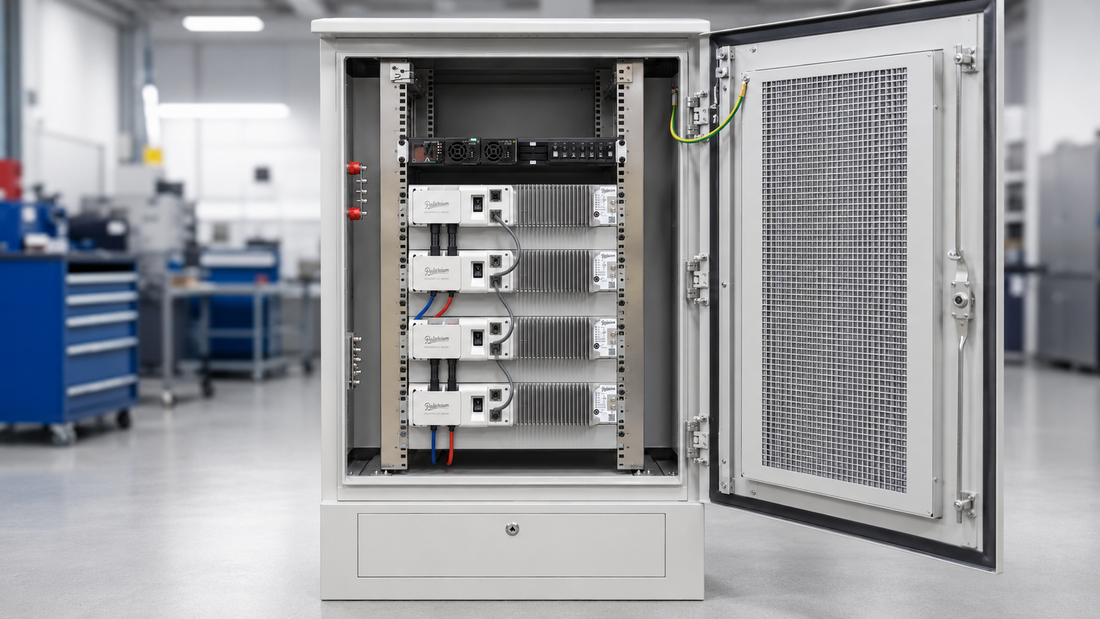
Safe integration of Polarium batteries within a larger system requires the use of correctly rated overcurrent and overvoltage protection devices. In most telecommunications and similar applications, miniature circuit breakers (MCBs) are incorporated directly into the DC system. For larger installations, where higher current ratings are required, moulded case circuit breakers (MCCBs) are typically used and housed in a separate distribution panel.

These protective devices are sized according to the specific installation requirements and work in conjunction with the circuit breaker built into each Polarium battery module. Together, they ensure that both the system and its cabling are protected in the event of a fault.

Appropriately sized DC cables must also be selected to match the system’s maximum continuous current and fault current rating. Correct cable sizing helps avoid overheating, reduces the risk of insulation damage, and minimises voltage drop, which is particularly important in long cable runs. Cable selection should follow relevant Australian standards and take into account installation method, ambient temperature, and length.

When a fault occurs, the upstream MCB or MCCB will isolate the affected circuit, while the integrated breaker at the battery module provides an additional layer of localised protection. This dual-layer approach minimises the risk of damage to equipment and cabling, while also enhancing operator safety.


Long-Term Operational Safety

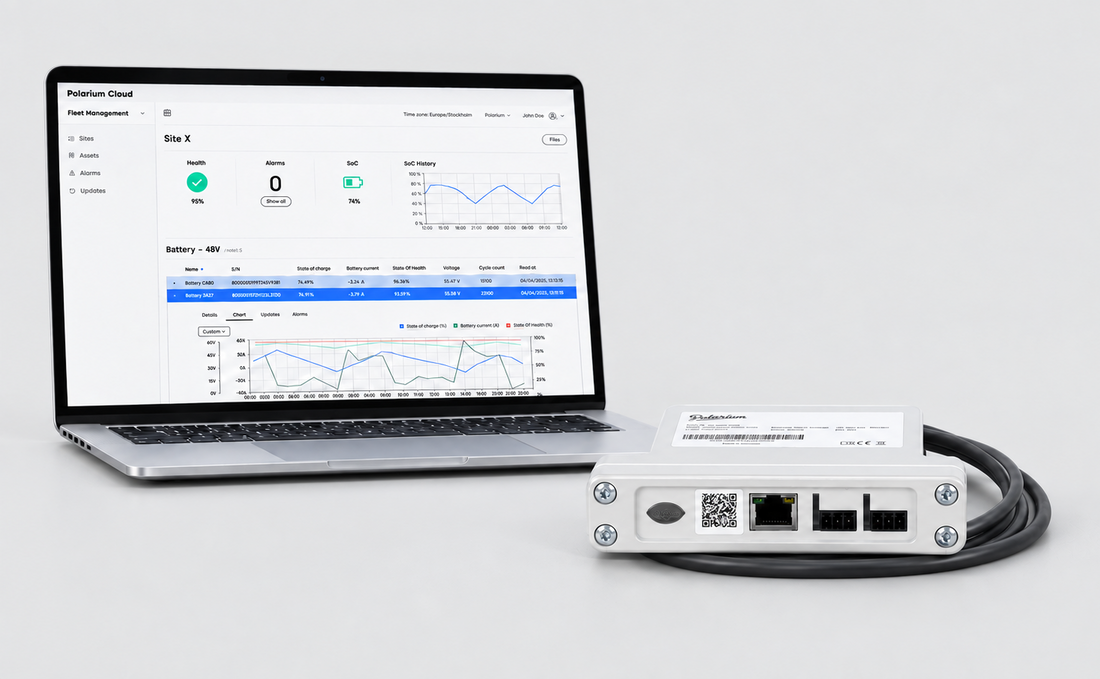
Maintaining compliance does not stop once a system is commissioned. Polarium’s integrated Battery Management System (BMS) continues to monitor key safety parameters over the life of the battery, ensuring that any conditions that could compromise safety or compliance are identified early. Operators can leverage the BMS’s remote monitoring capabilities to confirm that deployed assets remain within their certified operational parameters.

This combination of certified design, correct installation, and ongoing monitoring ensures that Polarium batteries meet both the letter and the spirit of relevant safety standards.

Share Article

Polarium Lithium-ion Batteries

  • background-product
    Polarium SLB48-100-135-5H | ... The Polarium SLB48-100-135-5H is a 48V, 100Ah lithium-ion backup... View Details
  • background-product
    Polarium SLB48-150-145-5 48V... Polarium SLB48-150-145-5 is a high-capacity 48 V, 150 Ah... View Details
  • background-product
    Polarium SLB48-230-146-5 | 4... The Polarium SLB48-230-146-5 is a 48V, 230Ah lithium-ion battery... View Details
  • background-product
    Polarium SLB48-050-124-2 Bat... The Polarium SLB48-050-124-2 is a 48V 50Ah NMC lithium-ion... View Details
  • background-product
    Polarium SLB48-100-135-6 LFP... The Polarium SLB48-100-135-6 is a compact, smart lithium battery... View Details
  • background-product
    Polarium SLB48-150-146-2 Bat... The Polarium SLB48-150-146-2 Battery is a high-capacity energy storage... View Details
  • background-product
    Polarium SLB48-250-146-2 Bat... The Polarium SLB48-250-146-2 Battery is a high-capacity energy storage... View Details
1/ 7

Need expert advice for your next project?

Related News

  • Blogs Medium-voltage switchgear panels in a substation switchroom, powered by a 110V DC auxiliary tripping and protection supply
    Switchgear Tripping & Protection Power Supplies: What 110V/125... 09/11/26
  • Blogs Delta Electronics Americas headquarters exterior, with Delta signage and a glass-fronted entrance.
    Powerbox Insights: Behind the Brand – Delta Electronics 29/10/26
  • Blogs Aerial view of a telecommunications tower and equipment shelters on a rural hilltop surrounded by farmland and rolling hills.
    Did You Know? Polarium Busbar Accessories Make Battery Paralle... 20/10/26
  • Blogs Did You Know? Polarium Connect Alert Adds Additional Layer of Smart Alarming to Remote Sites
    Did You Know? Polarium Connect Alert Adds Additional Layer of ... 16/10/26
  • Blogs Unlocking Battery Data: The Role of the MODBUS-USB Cable in a Polarium Installation
    Unlocking Battery Data: The Role of the MODBUS-USB Cable in a ... 07/10/26
  • Blogs Driving Warehouse Intelligence: DC Motor Solutions for AGVs and AMRs
    Driving Warehouse Intelligence: DC Motor Solutions for AGVs an... 18/08/26
  • Blogs High Performance DC Power in Just 1RU: Getting More Out of the Delta Eltek Flatpack S Platform
    High Performance DC Power in Just 1RU: Getting More Out of the... 10/08/26
  • Blogs Ag-Tech in Motion: Smarter Drives for Smarter Farms
    Ag-Tech in Motion: Smarter Drives for Smarter Farms 07/07/26
  • Blogs AC UPS vs DC-UPS for PoE Security Infrastructure: Why Architecture Matters
    AC UPS vs DC-UPS for PoE Security Infrastructure: Why Architec... 29/06/26
  • Blogs Rethinking Industrial UPS: Long Runtime, Remote Sites, and the Case for a Unified DC Bus
    Rethinking Industrial UPS: Long Runtime, Remote Sites, and the... 23/06/26
  • Blogs Redundancy Terms Demystified: N+1, A+B, 2N and What They Mean for Your DC Power System
    Redundancy Terms Demystified: N+1, A+B, 2N and What They Mean ... 19/06/26
  • Blogs Cincon Ultra-Wide Input DC-DC Converters for Rail Applications
    Cincon Ultra-Wide Input DC-DC Converters for Rail Applications 05/06/26
  • Blogs Did You Know? Polarium Batteries Can Protect Themselves Against Theft
    Did You Know? Polarium Batteries Can Protect Themselves Agains... 22/05/26
  • Blogs Rethinking AC UPS: When Rectiverter Architectures Are a Better Fit for Critical Security Infrastructure
    Rethinking AC UPS: When Rectiverter Architectures Are a Better... 08/05/26
  • Blogs Delta DIN Rail Power Supplies Compared: Chrome vs. Lyte II vs. Force GT
    Delta DIN Rail Power Supplies Compared: Chrome vs. Lyte II vs.... 06/05/26
  • Blogs Why EESS Registration Matters for Security Installers: Understanding the Role of Compliant Power Supplies
    Why EESS Registration Matters for Security Installers: Underst... 01/05/26
  • Blogs Implementing Reliable DC Redundancy with the Camtec RED00202 (R2) 1000W Redundancy Module
    Implementing Reliable DC Redundancy with the Camtec RED00202 (... 31/03/26
  • Blogs Rethinking Emergency Door Release: Jack Fuse Electronic Break Glass in Modern Access Control Systems
    Rethinking Emergency Door Release: Jack Fuse Electronic Break ... 30/03/26
  • Blogs Designing DC-UPS Systems for Proactive Security Maintenance
    Designing DC-UPS Systems for Proactive Security Maintenance 29/03/26
  • Blogs Supplying EFOY Approved Methanol in Australia
    Supplying EFOY Approved Methanol in Australia 20/03/26
  • Blogs Smart Monitoring for Smarter Batteries: Unlocking Polarium’s Modbus Capability
    Smart Monitoring for Smarter Batteries: Unlocking Polarium’s M... 18/03/26
  • Blogs Battery Backup Made Simple – The All-in-One ARIS Power DC-UPS
    Battery Backup Made Simple – The All-in-One ARIS Power DC-UPS 12/03/26
  • Blogs AC/AC Frequency Converters Explained: Beyond Transformers
    AC/AC Frequency Converters Explained: Beyond Transformers 05/03/26
  • Blogs Managing Obsolescence in Railway Power Systems: How Schaefer Delivers Long-Term Continuity
    Managing Obsolescence in Railway Power Systems: How Schaefer D... 25/02/26
  • Blogs Brushed vs Brushless DC Motors: Choosing the Right Technology for Your Application
    Brushed vs Brushless DC Motors: Choosing the Right Technology ... 17/02/26
  • Blogs Why Your DIN-Rail Power Supply Matters More Than You Think
    Why Your DIN-Rail Power Supply Matters More Than You Think 03/02/26
  • Blogs Smarter Backup for ISPs: Eltek Rectiverter + Polarium 100Ah Lithium Battery
    Smarter Backup for ISPs: Eltek Rectiverter + Polarium 100Ah Li... 29/01/26
  • Blogs The Eltek Rectiverter Explained: DC Power, AC Backup and Inverter Functionality in One
    The Eltek Rectiverter Explained: DC Power, AC Backup and Inver... 28/01/26
  • Blogs Electrical Protection Devices - Part 4 of Polarium's Five Layers of Safety
    Electrical Protection Devices - Part 4 of Polarium's Five Laye... 16/01/26
  • Blogs Battery Management System (BMS) - Part 3 of Polarium's Five Layers of Safety
    Battery Management System (BMS) - Part 3 of Polarium's Five La... 09/01/26
  • Blogs From Latronics to Premium: Practical Inverter Replacements for 110Vdc Industrial Applications
    From Latronics to Premium: Practical Inverter Replacements for... 08/01/26
  • Blogs Built in Australia, Proven in the Pilbara: The Story of the PBSP-74O Locomotive Inverter Series
    Built in Australia, Proven in the Pilbara: The Story of the PB... 06/01/26
  • Blogs Why the Powerbox PB256 Series Remains the Backbone of Electronic Security & Access Control Installations
    Why the Powerbox PB256 Series Remains the Backbone of Electron... 17/12/25
  • Blogs Module Level Safety - Part 2 of Polarium's Five Layers of Safety
    Module Level Safety - Part 2 of Polarium's Five Layers of Safety 09/12/25
  • Blogs Cell Level Safety - Part 1 of Polarium's Five Layers of Safety
    Cell Level Safety - Part 1 of Polarium's Five Layers of Safety 02/12/25
  • Blogs Catenary Power Conversion: Rethinking How We Power Onboard & Wayside Equipment
    Catenary Power Conversion: Rethinking How We Power Onboard & W... 27/11/25
  • Blogs Five Layers of Safety in Polarium Lithium-Ion Batteries
    Five Layers of Safety in Polarium Lithium-Ion Batteries 17/11/25
  • Blogs Rethinking Backup Power: How Mixing Lithium and Lead Acid Extends Telecom Site Runtime
    Rethinking Backup Power: How Mixing Lithium and Lead Acid Exte... 11/11/25
  • Blogs LFP vs NMC: Choosing the Right Battery Chemistry for Your Application
    LFP vs NMC: Choosing the Right Battery Chemistry for Your Appl... 28/08/25
  • Blogs What ‘Support for Eltek’ Really Means at Powerbox
    What ‘Support for Eltek’ Really Means at Powerbox 11/08/25
  • Blogs Designing DC-UPS Systems with the compact Eltek MicroPack
    Designing DC-UPS Systems with the compact Eltek MicroPack 24/07/25
  • Blogs Smart Fuse Protection for Security Cabling: Inside the Jack Fuse Power Port™ Range
    Smart Fuse Protection for Security Cabling: Inside the Jack Fu... 13/06/25
  • Blogs Where Solar Falls Short, Fuel Cells Deliver: Winter Backup for CCTV
    Where Solar Falls Short, Fuel Cells Deliver: Winter Backup for... 30/05/25
  • Blogs Ensuring Reliable Control Systems in Water Utilities with DC-UPS Solutions
    Ensuring Reliable Control Systems in Water Utilities with DC-U... 28/05/25
  • Blogs What Size Inverter Do I Need For Industrial Applications?
    What Size Inverter Do I Need For Industrial Applications? 20/05/25
  • Blogs Solving Security Challenges in Healthcare with Powerbox
    Solving Security Challenges in Healthcare with Powerbox 17/01/25
  • Blogs Polyamp PM Series DC/DC Converters
    Polyamp PM Series DC/DC Converters 10/09/24
1/ 47