

Background
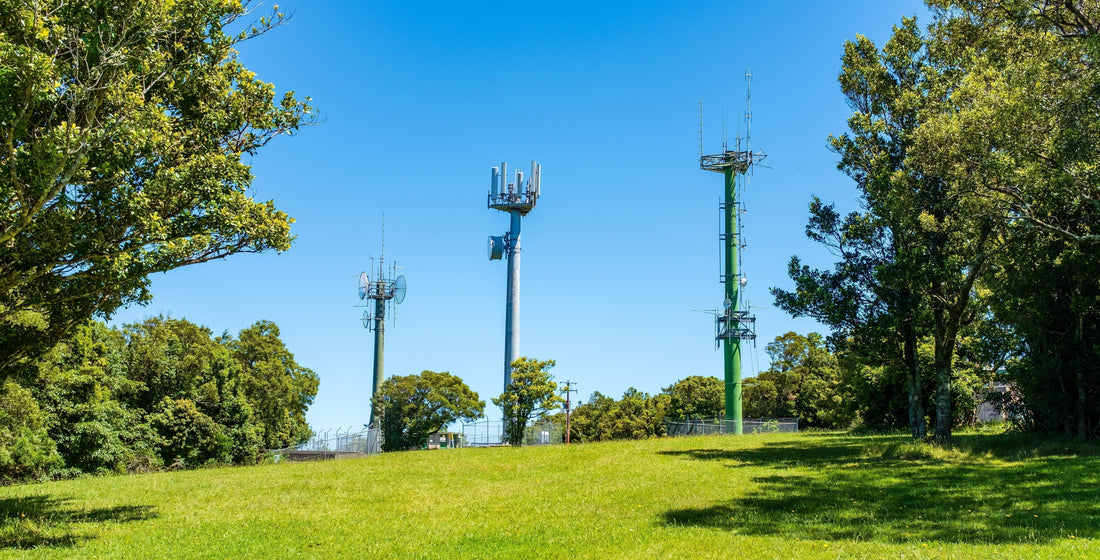
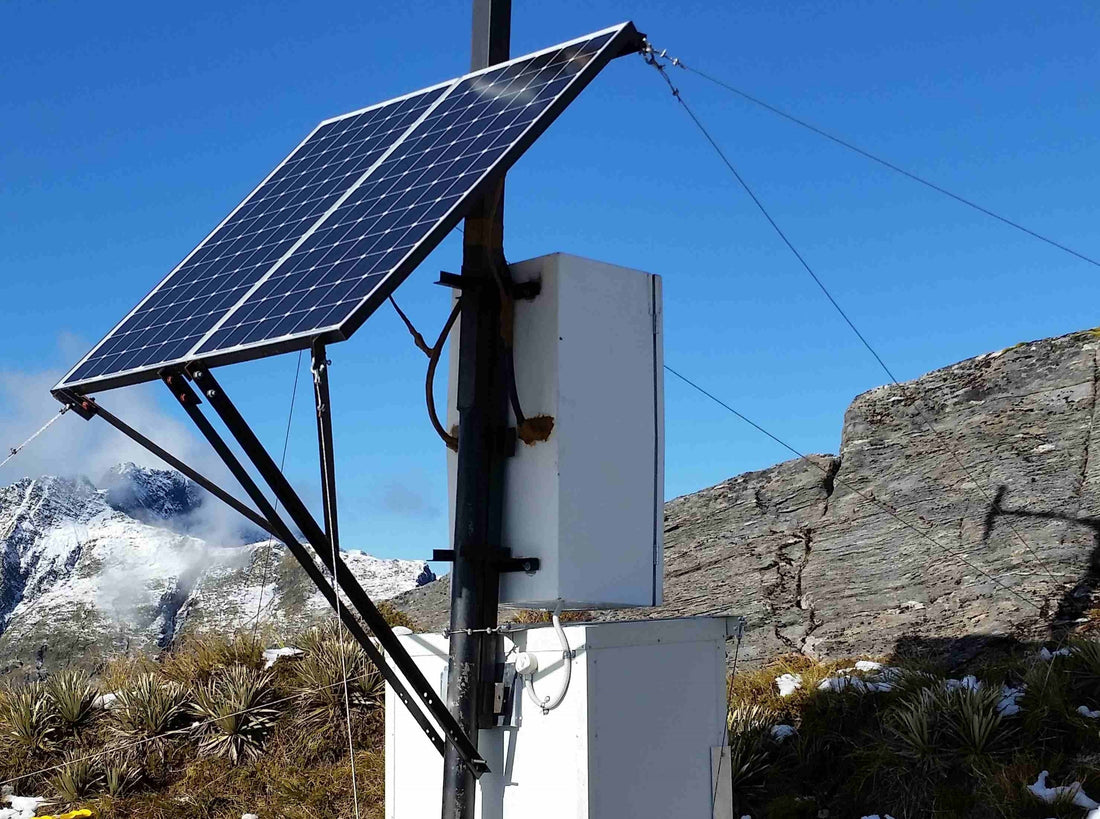
Remote communications sites enable secure voice and data links across vast and often inaccessible regions, forming a cornerstone of critical government infrastructure. These sites are located in remote North Queensland, where service access can be logistically complex and costly. The climate presents operational challenges: long periods of extreme heat are followed by a wet season in which high humidity, persistent cloud cover and heavy rainfall severely limit solar generation. To ensure uninterrupted operation year-round, each site requires a reliable DC power system with extended autonomy, secondary charging capability, and minimal maintenance.
Challenge
The project involved modernising power infrastructure across multiple remote sites. Key challenges included:
- Limited space in outdoor-rated enclosures already housing communications equipment.
- Five-day autonomy requirement for all operational loads.
- Ambient temperatures regularly exceed 35°C, with enclosure temperatures significantly higher under full sun.
- Persistent humidity and moisture ingress risks.
- Reduced solar generation during the wet season, creating greater reliance on battery autonomy and generator backup.
- Minimising helicopter lift requirements for installation and maintenance.
- Seamless integration of energy storage with hybrid solar generation and existing site control systems.

Solution
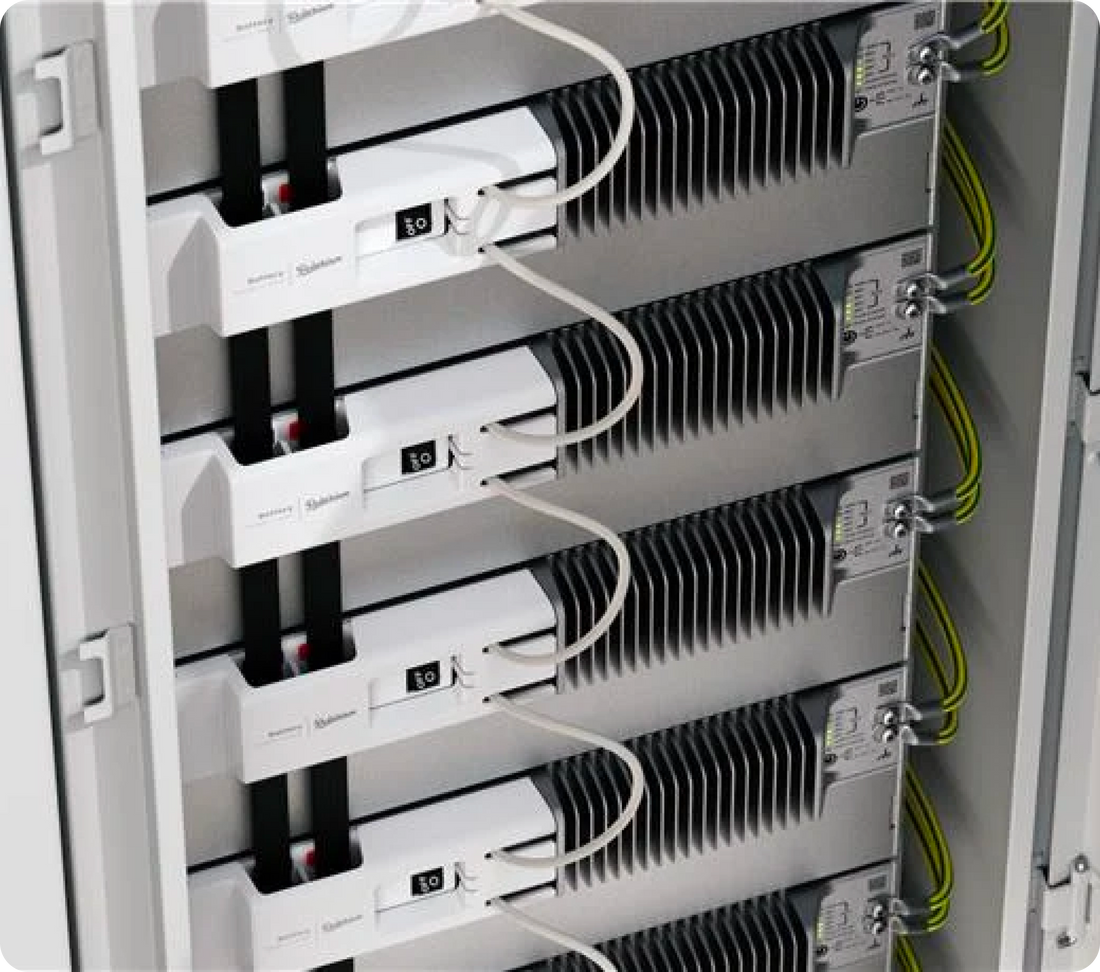
Powerbox supplied and integrated complete solar hybrid DC power systems alongside Polarium SLB48-250-146-2 NMC lithium-ion battery modules.
- The DC power systems were engineered for reliable performance in high-temperature, high-humidity environments, combining solar PV, MPPT charge control, and intelligent DC distribution.
- Secondary charging capability via standby generators was integrated for wet-season resilience, ensuring full recharge even during extended periods of poor solar input.
- Polarium NMC batteries were chosen for their high energy density, compact footprint, and light weight, enabling the required capacity to be installed without additional enclosures or structural modifications.
- The integrated BMS manages cell balancing automatically, eliminating the need for periodic manual equalisation charges. This is a significant advantage on remote, unattended sites.
- Each battery's BMS provided real-time telemetry covering voltage, state of charge, and alarms, fed directly to the system controller for remote monitoring.

Battery Technology Selection: Why Polarium NMC
Selecting the right battery chemistry and module format for a remote site application is rarely straightforward. In this project, the constraints were unambiguous: limited enclosure space, a five-day autonomy target, extreme operating temperatures, and a logistical environment where additional hardware means additional helicopter lifts, each with a material cost attached.
Two lithium options were evaluated. The alternative product offered modules with a capacity of approximately 3.8kWh. The Polarium SLB48-250-146-2 offered 12.9kWh per module, a 3.4:1 capacity advantage in roughly the same footprint class.
At the system level, that ratio is decisive. To match the energy storage capacity delivered by each Polarium module, the competing solution required between three and four modules. Multiply that across the number of sites and the full battery capacity required at each, and the difference in cabinet count, rack space, and structural load becomes significant, not marginal.
In a fixed outdoor enclosure already housing communications equipment, there is no headroom to absorb that kind of hardware delta. Additional battery cabinets would have required either enclosure modifications or the deployment of secondary cabinets, both of which introduce structural, civil, and procurement costs that fall outside the original project scope.
The more immediate constraint was the helicopter lift budget. Remote North Queensland sites are not road-accessible. Every kilogram of equipment arriving on-site arrives by air. The Polarium modules' combination of high energy density and relatively low module weight meant the required battery capacity could be flown in fewer lifts. The competing product's module count would have driven additional rotary hours, a direct and quantifiable cost impost on the project.
Beyond the density argument, NMC chemistry offered a thermal performance profile suited to the operating environment. At sustained ambient temperatures above 35 degrees C, with enclosure temperatures under full sun higher still, battery service life is a legitimate concern. The Polarium BMS actively manages cell temperature and balancing, protecting capacity retention over the asset's operating life without requiring manual intervention from site personnel.
The outcome of the selection process was not a marginal preference. The Polarium modules allowed the project to meet its autonomy specification within the existing enclosure footprint, at a lower installed module count, with fewer lifts, and with a maintenance profile suited to unattended remote operation.
Outcome
The upgrade programme delivered:
- Greater than Five days of autonomy at full design load.
- Reliable year-round performance in high ambient temperatures, tropical humidity, and reduced solar conditions during the wet season.
- Reduced capital and operational costs by eliminating additional battery cabinets and reducing helicopter lifts.
- Greater operational resilience through hybrid solar, battery, and generator design.
- Remote monitoring of both power system and battery health, enabling predictive maintenance and fewer unplanned site visits.
Powerbox Value Proposition
By supplying both the complete solar hybrid DC power systems and high-density Polarium NMC batteries, Powerbox delivered an integrated, climate-resilient energy solution for critical government communications infrastructure. Our ability to engineer systems for extreme heat, tropical humidity, and seasonal solar shortfalls ensures operational continuity for critical government communications networks operating in some of Australia's most demanding environments.

Specify the Right Battery for Your Remote Site
Remote hybrid power infrastructure leaves no margin for undersized or poorly matched energy storage. If your project involves constrained enclosure space, difficult access, or extended autonomy requirements in a demanding climate, the battery selection decision carries real cost consequences across the full asset life.
Powerbox Australia supplies and integrates Polarium lithium battery systems alongside complete solar hybrid DC power solutions, engineered for the conditions that matter: high ambient temperatures, unattended operation, and logistics environments where hardware density directly affects project cost.
Polarium batteries are available in both NMC and LFP chemistries. NMC delivers the highest energy density where enclosure space and lift weight are the primary constraints. LFP offers a longer cycle life and enhanced thermal stability, and is well suited to remote infrastructure applications where longevity and low maintenance over an extended asset life are the priority. Powerbox selects the right chemistry for each project based on the site conditions, load profile, and operational requirements rather than a default specification.
Contact Powerbox Australia to discuss your remote site power requirements.
About the Author
James Rutty, Director, Powerbox Australia
James Rutty is a Director at Powerbox Australia, with over 15 years of experience in power electronics for critical infrastructure across Australia and New Zealand. He works with engineers, consultants, and integrators at the architecture level, from initial load assessment and system design through to product specification, commissioning support, and lifecycle management.