
Background
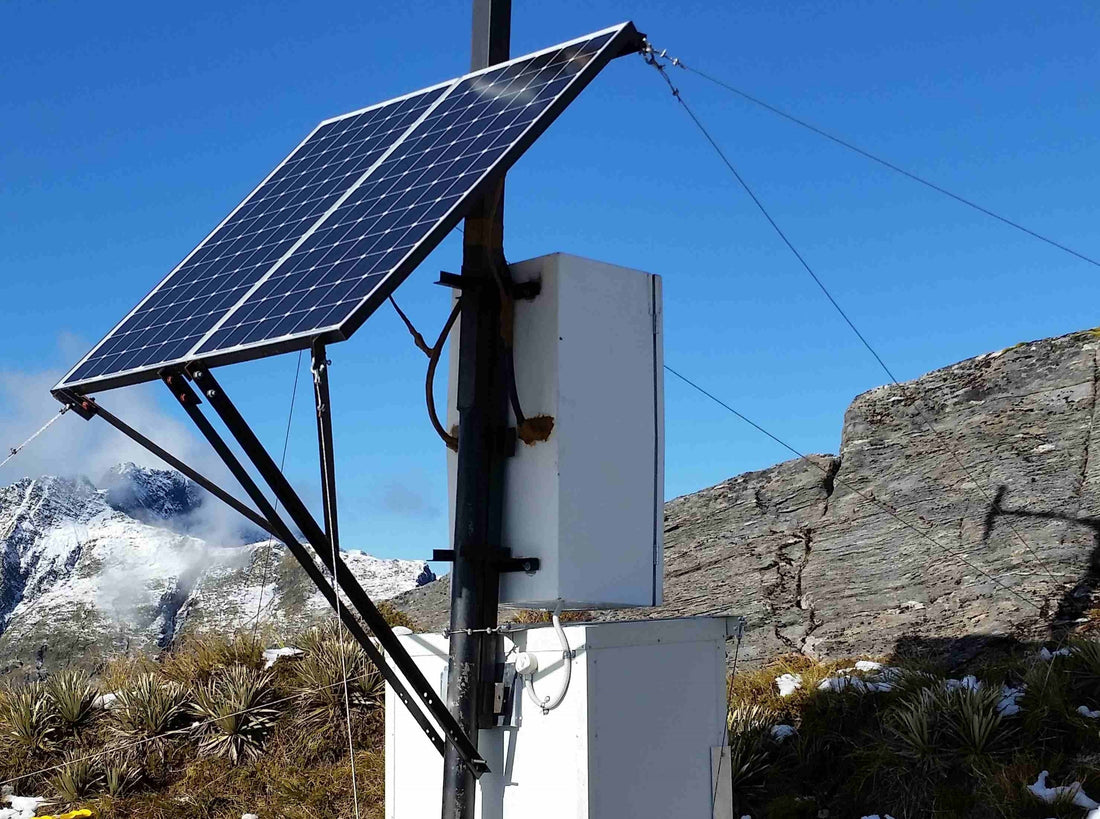
A Queensland-based SAPS integrator has been deploying utility-grade stand-alone power systems across regional Queensland as part of a programme with a major power utility. Powerbox Australia supported the programme as battery technology partner, assisting with product selection, supply of the Polarium SLB48-250-146-2 modules, and back-end application engineering.

The Challenge
Regional Queensland power networks include long stretches of overhead distribution lines supplying small communities, individual properties, and critical assets. In many areas these lines are costly to maintain, difficult to access, and exposed to outage risk from severe weather, vegetation, and bushfire. Where a utility-grade SAPS can replace dependence on overhead infrastructure, the utility benefits from reduced maintenance liability and the end customer gets more reliable supply. Delivering that outcome depends entirely on the SAPS performing to grid-equivalent standards in demanding field conditions.
The SAPS installations needed to meet specific technical requirements:
- Consistent power quality and availability equivalent to grid supply
- Multi-day autonomy for extended low-solar periods
- Safe operation and long service life in high ambient temperatures and harsh environmental conditions
- Surge and blackstart capability to support inverters energising heavy capacitance loads
- Compact design to fit within the integrator's purpose-built SAPS skid enclosure
Battery selection was central to meeting these requirements. Conventional technologies would have resulted in larger, heavier skids, a significant constraint given the fixed enclosure footprint.
The Solution
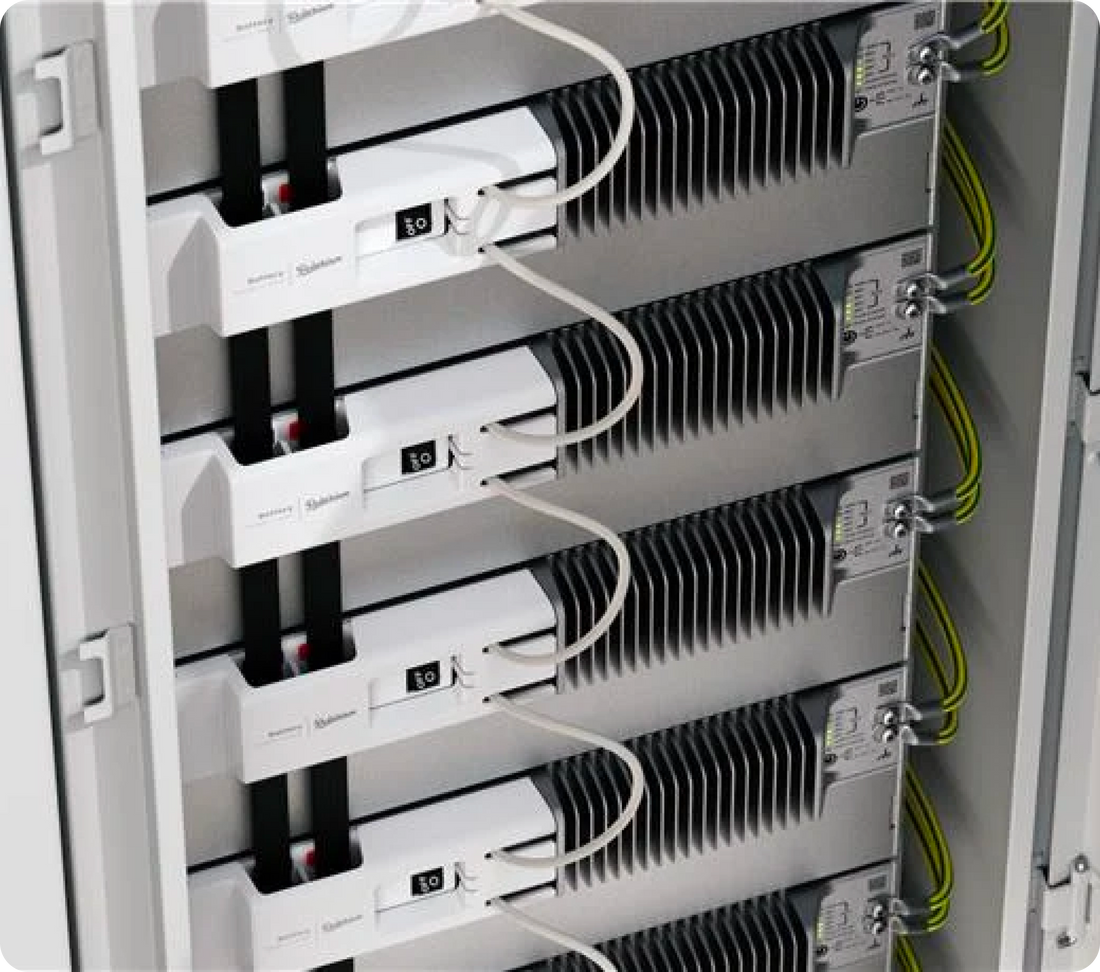
Powerbox Australia supplied Polarium SLB48-250-146-2 NMC lithium-ion battery modules, each rated at 250Ah nominal capacity at 48Vdc, for integration into the integrator's SAPS skid assemblies. Systems were configured from approximately 75 kWh to 300 kWh total installed storage, depending on site demand and autonomy requirements.

Why NMC for this application
Battery chemistry selection was not incidental to this project; it was a defining design decision.
Energy density was the primary driver. NMC delivers meaningfully higher energy density than LFP at both the cell and module level. In a SAPS application where skid footprint is a fixed constraint, this translates directly into more usable storage capacity within the same physical envelope, or a smaller, lighter system for the same capacity target.
Cell balancing in an unattended system was the second consideration. LFP's flat discharge curve, while well suited to some applications, makes it harder for a BMS to accurately assess individual cell state of charge during normal operation, which can complicate balancing in large multi-cell strings. NMC's more defined voltage curve allows the BMS to track cell condition continuously and maintain balance without external intervention, an important characteristic for a remotely deployed system with no routine on-site maintenance.
Recharge behaviour across variable generation sources also favoured NMC. Its charge profile supports efficient recharge from both solar and diesel inputs across the operating conditions present on these sites, without the charge management complexity that can arise with other chemistries in high-temperature environments.
For a detailed side-by-side comparison of NMC and LFP across a broader range of criteria, see LFP vs NMC: Choosing the Right Battery Chemistry for Your Application.
The high energy density of the Polarium SLB modules allowed the integrator to build each SAPS within a compact skid footprint that would not have been achievable with conventional battery technologies.
The batteries were integrated with client-supplied Selectronic SP Pro inverters and generation hardware. To support this configuration, Powerbox also supplied the Polarium Solar Inverter Interface Box, which provides additional circuit protection between battery and inverter and delivers short-term surge current capability to assist with blackstarting the off-grid inverter platform when energising heavy capacitance loads.

A project-specific surge firmware profile was developed by Polarium to enable higher instantaneous current delivery for short durations. Powerbox validated this firmware under simulated site conditions against the Selectronic SP Pro platform and the utility's SAPS configuration prior to deployment.
Remote monitoring and SCADA integration
For a utility operating dispersed assets across a large geographic network, real-time battery performance monitoring is not a convenience; it is a core operational requirement. Each Polarium SLB module includes an integrated BMS that communicates directly with the site's control and monitoring infrastructure, feeding real-time state of charge, state of health, voltage, temperature, and alarm data into the utility's SCADA system.
This means the operations team has continuous visibility across every deployed SAPS without requiring a site visit to assess battery condition. Anomalies can be identified and actioned remotely, maintenance can be planned on actual performance data rather than fixed schedules, and early indicators of degradation can be caught well before they affect system availability. For a programme deploying systems across a large and geographically dispersed network, this level of visibility directly protects the utility's capital investment and reduces the risk of unplanned outages.
For more detail on Polarium's monitoring and communications capability, see Smart Monitoring for Smarter Batteries: Unlocking Polarium's Modbus Capability.
Key selection criteria for the Polarium SLB48-250-146-2:
- High energy density for reduced skid footprint
- Proven performance in high-temperature environments
- Integrated BMS with full remote monitoring and SCADA integration capability
- Compatibility with SAPS control architecture for optimised charge/discharge management
Each installed system combines solar PV as the primary generation source with diesel backup, allowing rapid recharge during prolonged low-solar periods.

Outcome
The programme has delivered utility-grade supply reliability to end customers who previously depended on overhead infrastructure that was costly to maintain and vulnerable to weather events. For the utility, deploying SAPS in these areas reduces ongoing maintenance liability and removes exposure to the operational risks associated with remote overhead lines.
From a technical standpoint the programme has demonstrated:
- Reliable black start performance underpinned by the project-specific Polarium firmware solution
- A compact skid design meeting the integrator's footprint requirements without compromising autonomy or performance
- Real-time battery monitoring across all deployed sites, enabling condition-based maintenance and long-term asset protection
Application Takeaway
For integrators designing utility-grade SAPS, battery selection and back-end application engineering are worth addressing early. Energy density, BMS capability, cell chemistry behaviour in unattended high-temperature environments, and inverter compatibility all have downstream consequences for system size, maintenance requirements, and long-term performance. Where systems are deployed at scale across a wide geographic area, SCADA-integrated battery monitoring should be treated as a system requirement from the outset.
Related Case Studies
High-Density Lithium Battery Backup and Solar Hybrid DC Power - Remote Government Infrastructure
Contact
If you're working on a SAPS project or off-grid power application in Australia or New Zealand, contact Powerbox Australia to discuss battery selection, system sizing, and integration support.
About the Author
James Rutty, Director, Powerbox Australia
James Rutty is a Director at Powerbox Australia, with over 15 years of experience in power electronics for critical infrastructure across Australia and New Zealand. He works with engineers, consultants, and integrators at the architecture level, from initial load assessment and system design through to product specification, commissioning support, and lifecycle management.